
Everything that wears out on the machine, in one record.
A fleet portal for the mines, quarries, farms, and contractors your shop services — and for your own service team. Machines, tire positions, maintenance parts, PM schedules, hour meters, service history, and downtime live on one machine record, so the next replacement is planned instead of discovered on the haul road.
The fleet side of the same ledger — tires and parts.
Fleet data usually lives in a clipboard binder, a tech's phone, and a spreadsheet nobody trusts — and tires get tracked in a different place than filters and hoses. Fleet Management gives each customer one portal: machines with catalog specs, a tire position map per configuration, the parts fitted and consumed on that unit, PM schedules driven off the hour meter, survey history, downtime tracking, and service requests — all tied to the dealer that services them.
Specific outcomes, not generic promises.
Tire position maps, not guesswork.
Register rims and tires by position (1L, 2RR, drive, steer) against the machine's real axle configuration. Tread, pressure, temperature, and hours-on-tire are tracked per position with a status of good, worn, or replace.
Parts tracked per machine.
Filters, hoses, undercarriage, GET, brakes, and batteries recorded against the unit they were fitted to — with install date, hour meter, and remaining life next to the tire data instead of in a separate binder.
PM that comes due on its own.
Service intervals run off the hour meter or calendar, and the portal shows what's coming due across the fleet this week — with the parts each service needs already listed.
Downtime and readiness you can defend.
Availability, MTBF, MTTR, unsafe conditions, and restricted machines are computed from logged events — so the uptime conversation is a number, not an argument.
Cost per machine, tires and parts.
Total spend per unit broken out by category and by hour, so the fleet can see which machines are eating the budget and why — before the annual review.
Surveys and service in one loop.
A tech runs a digital survey in the field; findings raise issues, issues become work orders, and work orders flow back into the same POS and dispatch flow your bays already use.
An AI fleet assistant on the data.
The assistant reads the fleet — unsafe tire conditions, positions entering the replacement window, PM coming due, machines at risk — and surfaces the next action instead of leaving it in a report nobody opens.
Suggested orders for tires and parts.
Positions approaching replacement and services approaching their interval generate a suggested order against your dealer catalog, with real sizes and part numbers matched to listed products and resolved pricing.
A portal that keeps the account.
Your fleet customer logs into a portal that carries your shop's name, your catalog, and your service history — making the dealer relationship the system of record instead of a phone number.
What it looks like in use.
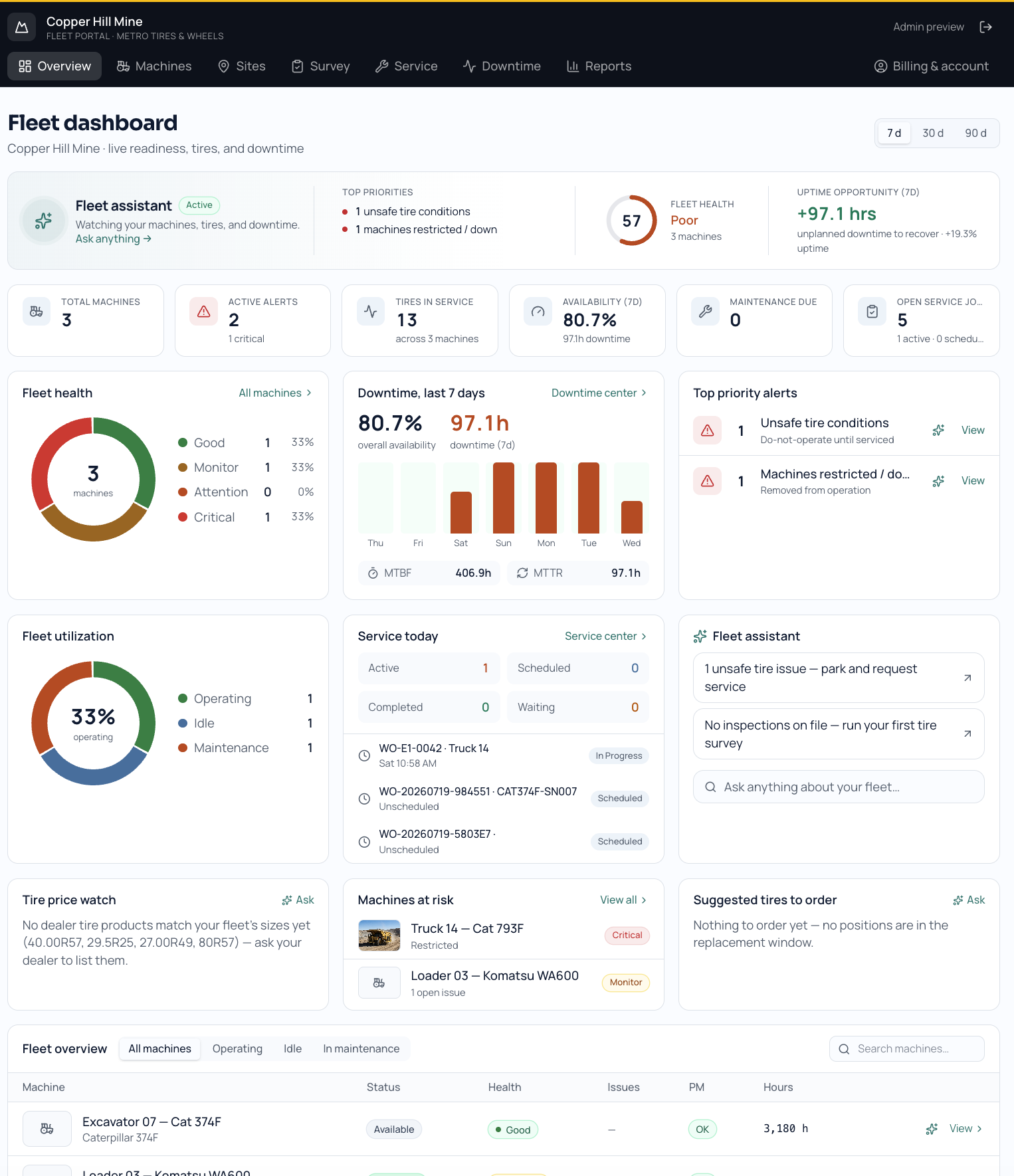
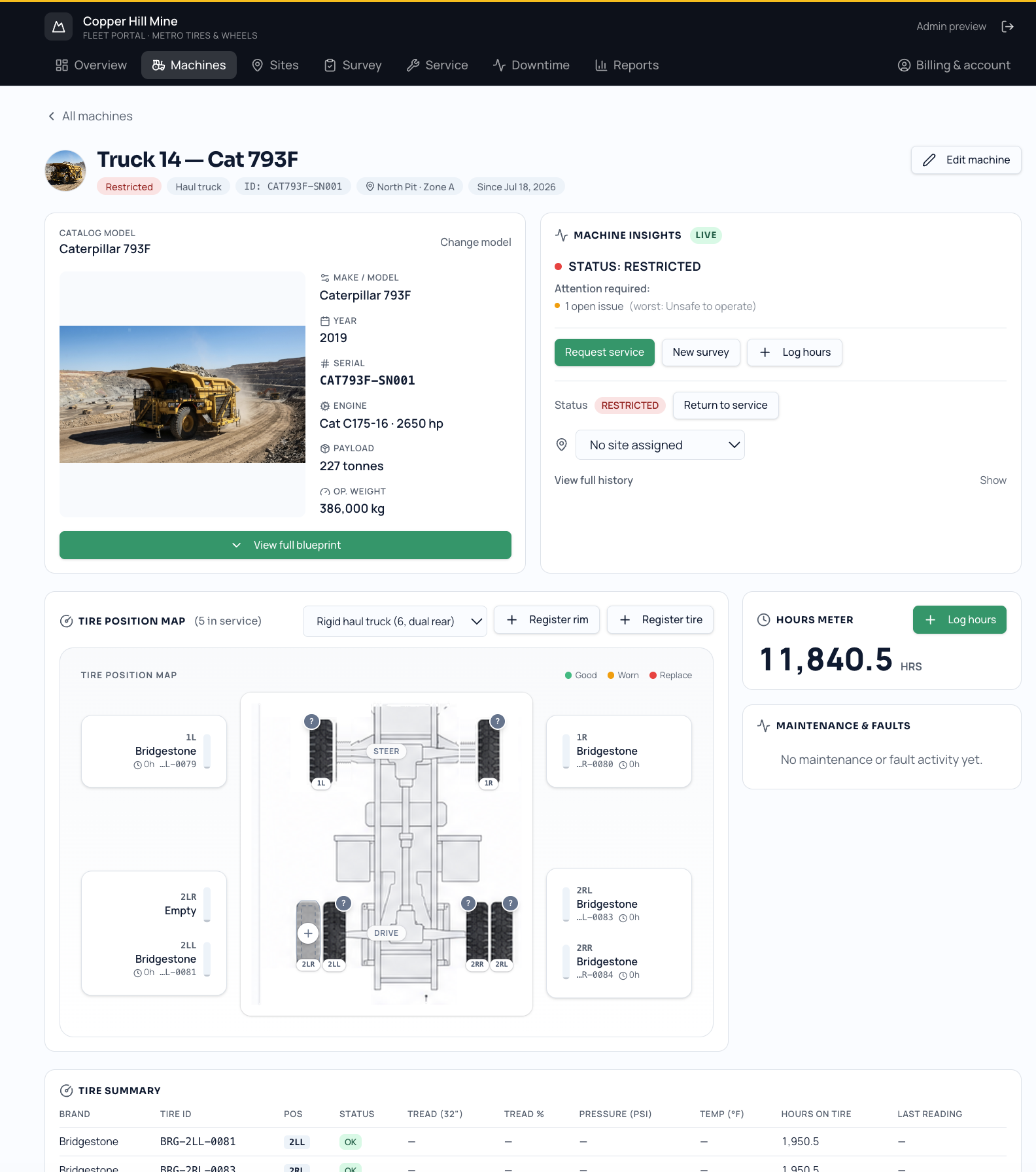
Fleet Management is actively being built out. Machine records, tire position mapping, parts and PM tracking, surveys, downtime, and service requests are the core of the module — confirm which surfaces are live for your rollout on a call.